About
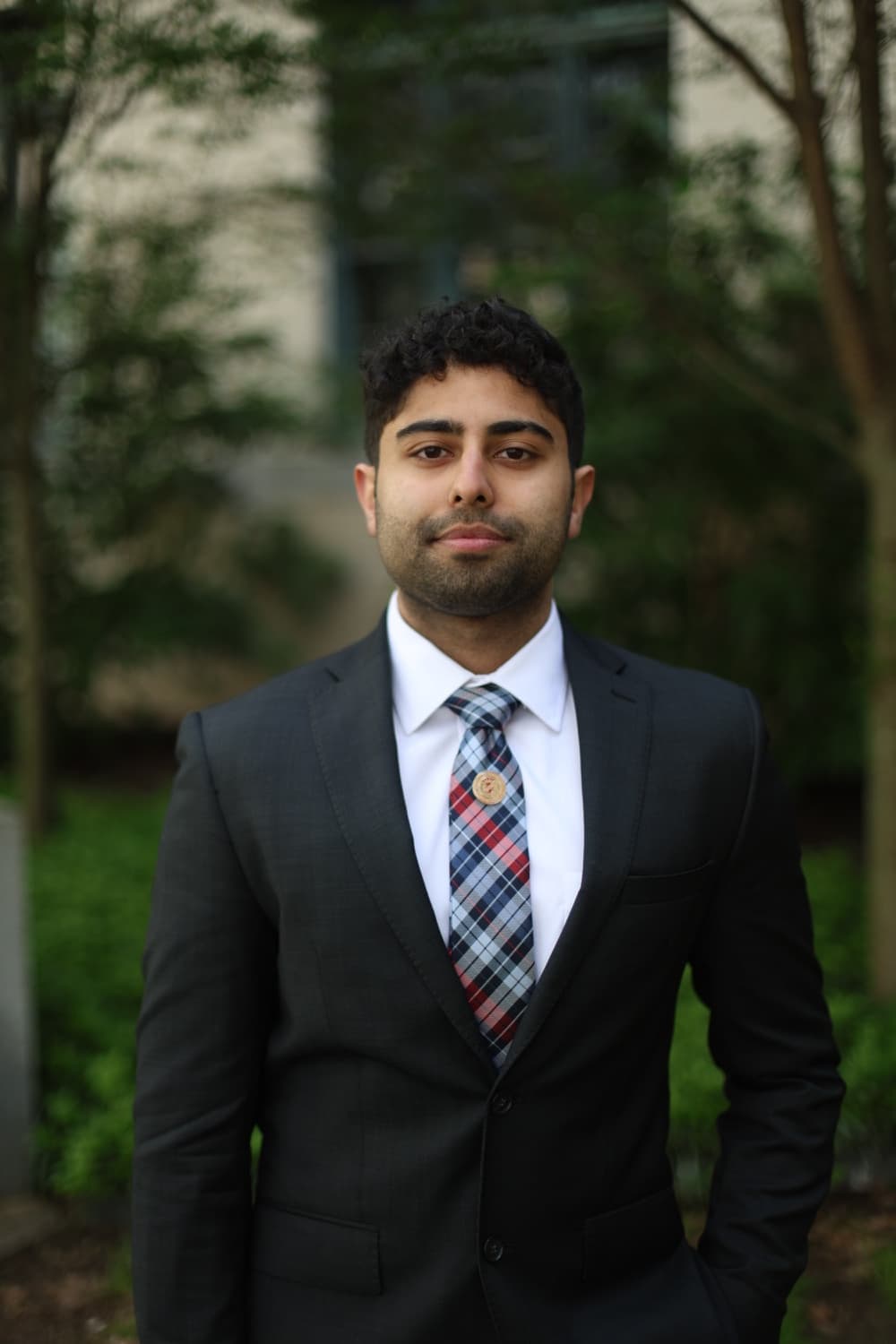
I’m a Founding Engineer building AI systems that can understand the real world over time.
At FlowState AI, I build video intelligence systems for businesses. Underneath that work is a research problem I’m deeply interested in: long-form and cross-video understanding, where models need to follow context, connect events, and reason over hours of footage or many related videos.
Much of my work has lived in settings where intelligence has to survive contact with messy reality: reconstructing 3D scenes from sparse imagery at MIT Lincoln Laboratory, building multimodal personality detection at Openstream.ai, and developing GraphSLAM for Carnegie Mellon’s autonomous racecar as part of the team that completed the first fully autonomous Formula-style lap in North America.
I’ve also spent years competing in chess, reaching a national ranking of #48 in the U.S. among 18-year-olds. My TEDx talk came from a different side of that world: lessons learned from playing street chess hustlers around the world. That experience shaped how I think about pattern recognition, adaptation, and decision-making under pressure.
Across these experiences, I keep coming back to the same idea: intelligence is most interesting when it has to operate in dynamic, imperfect environments. I’m working toward harder AI research problems by building production systems from the ground up: the data, infrastructure, evaluation, and product loops that make models useful outside the lab.
Long term, I want to help build AI systems that understand the real world over time, across video, multimodal data, and other messy streams of experience.
Education
Carnegie Mellon University
B.S. Information Systems · Minor in Artificial Intelligence
GPA 3.8 · Dec 2024
Toolkit
Languages
Backend & Systems
AI & Multimodal
Infra & Cloud
Experience
Jan 2025 — Present
FlowState AI
Founding Engineer (Employee #1)
Building the backend and core platform for scalable video ingestion, retrieval, and agentic search — powering enterprise video intelligence across 10,000+ hours of content. Leading architecture, product execution, and early team building.
May 2024 — Jul 2024
Openstream.ai
Machine Learning Intern
Designed a multimodal fusion mechanism for temporally aligned audio and video, and trained 100+ models behind a personality-detection system that scores the five OCEAN traits from a live video feed.
Jun 2023 — Jul 2023
MIT Lincoln Laboratory
Machine Learning Intern
Implemented Neural Radiance Field methods (Instant-NGP, Nerfacto) to reconstruct photorealistic 3D models from sparse, low-quality 2D imagery — reaching 30+ PSNR while cutting training time roughly in half.
Jan 2023 — May 2023
CMU Mobility Privacy & Security Lab
Research Assistant
Built a Python/GCP web-crawling pipeline to extract and process metadata from 3M+ Google Play apps for large-scale privacy trend analysis.
Sep 2021 — Sep 2023
LeadershipCarnegie Autonomous Racing
Path Planning & SLAM Team Lead
Led a team of five building the car's GraphSLAM system (pose-graph optimization for mapping and localization) and debugged the path planner that completed the first autonomous lap in North American history at New Hampshire Motor Speedway.
Chess
I’ve spent nearly 15 years in competitive chess, reaching #48 in the U.S. among 18-year-olds. My TEDx talk reflects on what street chess hustlers taught me about intuition, adaptability, and finding wisdom in unexpected places.
TEDx Talk
Lessons from street chess
A talk on confidence, creativity, adaptability, and learning from unexpected teachers.
The throughline
Learning from adversarial systems, not just clean ones.
I’ve played competitive chess for nearly 15 years, reaching #48 in the U.S. among 18-year-olds. Along the way, I’ve competed against some of the strongest players in the world, including Abhimanyu Mishra, Brandon Jacobson, and Alexander Fishbein, and trained under Grandmaster Subramanian Arun Prasad.
Those experiences shaped how I think. At the highest levels, chess is not just about recognizing clean patterns. It is about making decisions when the signal is incomplete, the tradeoffs are sharp, and the other side is actively trying to expose weaknesses in your plan.
Some of the most memorable lessons came outside formal tournaments: playing street chess in Chicago, Amsterdam, Zurich, and New York. Those games were messier, faster, and less predictable, but they taught the same lesson from a different angle: intelligence has to hold up when the environment is imperfect.
That is the kind of problem I’m drawn to in engineering. The systems I like building rarely start clean. They begin as noisy sensor streams, sparse images, messy webpages, ambiguous user behavior, or thousands of hours of unstructured video. The work is learning what matters, building around uncertainty, and turning that ambiguity into something people can reason with.
Selected work
Contact
Let's build something.
Always happy to talk about ML systems, video understanding, or an interesting problem. The fastest ways to reach me are email and LinkedIn.